Land clearing for agriculture is the process of removing trees, brush, stumps, and debris from raw land to make it suitable for crop production or pasture development. Done correctly, it protects long-term soil health, improves drainage, and directly determines how productive your fields will be in year one and beyond. This guide covers every decision a farmer or landowner needs to make before the first machine rolls on site.
Agricultural land clearing differs from construction grading in one critical way: the goal is to preserve topsoil, not just move it. Farmers who treat clearing as a soil management operation — not just a demolition job — consistently see better germination rates, fewer erosion problems, and lower input costs in subsequent seasons. The decisions you make during clearing, from method selection to debris handling, echo through every crop cycle that follows.
This guide is written for farmers, ranchers, and rural landowners preparing ground for row crops, small grains, vegetables, or improved pasture. It covers USDA compliance, method comparisons, actual cost figures, permitting requirements, and a step-by-step project roadmap.
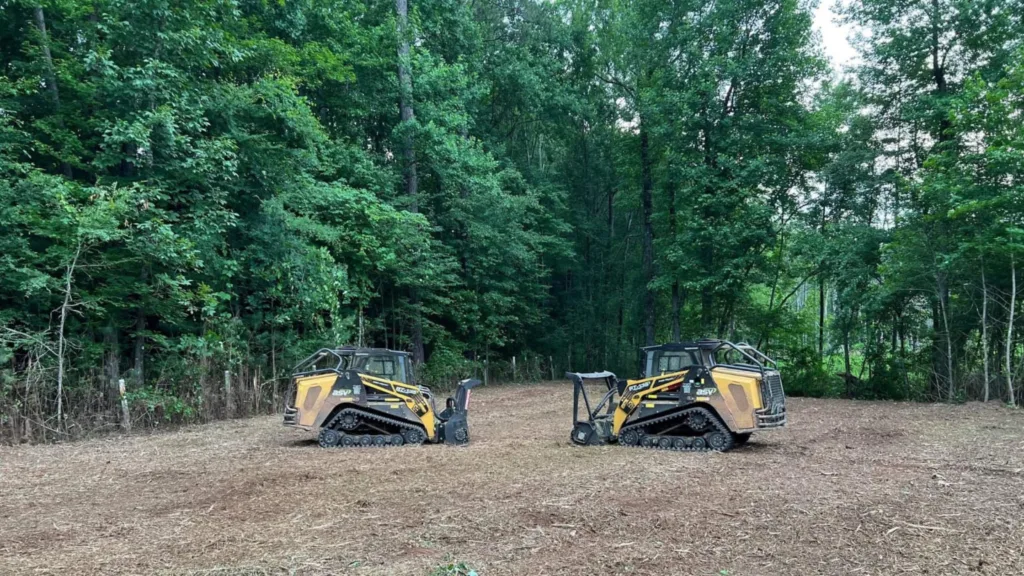
Table of Contents
- What Is Agricultural Land Clearing and Why It Matters
- USDA NRCS Conservation Practice Standard 460: What Farmers Must Know
- How Practice 460 Interacts With CRP and EQIP Enrollment
- Land Clearing Methods for Agriculture: Compared by Terrain and Vegetation
- Mechanical Clearing: Bulldozers, Mulchers, and Stump Grubs
- Prescribed Burning: When Ash Becomes a Soil Amendment
- Chemical and Manual Methods: Best for Small Acreage and Sensitive Soils
- How Much Does It Cost to Clear Land for Farming? Per-Acre Breakdown
- Factors That Drive Costs Up or Down on Your Property
- Permits, Environmental Regulations, and Wetland Restrictions
- Protecting Topsoil and Soil Health During and After Clearing
- Step-by-Step: Planning Your Land Clearing Project From Survey to First Crop
- Glossary
- FAQ
What Is Agricultural Land Clearing and Why It Matters
Agricultural land clearing is the systematic removal of vegetation, root systems, rocks, and debris from undeveloped or overgrown land so it can support cultivation or managed grazing. It includes tree felling, stump removal, woody brush clearing, grading, and drainage preparation. The end goal is a workable seedbed or pasture surface — not a bare construction pad.
Why it matters comes down to one word: productivity. Poorly cleared land harbors root systems that compete with crops for water and nutrients, creates drainage problems that drown seedlings, and leaves uneven terrain that damages equipment. A University of Nebraska Extension study found that inadequate stump and root removal can reduce row crop yields by 15–30% in the first three seasons due to soil disruption and residual root competition.
Proper clearing also protects your investment in inputs. Fertilizer applied to soil with compromised structure and drainage leaches out before crops can use it. Cover cropping after clearing stabilizes the surface and begins rebuilding organic matter — but only if the clearing itself preserved the topsoil layer to begin with. Every step in the clearing process either protects or destroys the biological capital sitting in your top 6–12 inches of soil.
Land clearing meaning varies by context. In agriculture, it specifically refers to preparing ground for biological production, which is why USDA treats it differently from clearing for development. That distinction matters for regulatory compliance, cost-sharing eligibility, and environmental review requirements.
USDA NRCS Conservation Practice Standard 460: What Farmers Must Know
USDA NRCS Conservation Practice Standard 460 (Land Clearing) defines the requirements, purposes, and conditions under which land clearing qualifies as a conservation practice eligible for federal support. According to the NRCS official standard, Practice 460 applies when clearing is performed to improve the productive capacity of agricultural land while protecting soil, water, air, plant, and animal resources.
To qualify under Practice 460, the clearing activity must meet specific source concern criteria. The land must have a defined agricultural purpose — crop production, hayland, or pasture — and the clearing method must minimize disturbance to topsoil, avoid unnecessary drainage of wetlands, and include a plan for debris disposal that does not create erosion or water quality hazards. NRCS field offices review clearing plans against these standards before approving cost-share payments.
Practice 460 is not a blanket approval for any clearing activity. NRCS distinguishes between clearing that serves a conservation purpose and clearing that converts sensitive land, particularly wetlands and highly erodible land (HEL), to agricultural use. Clearing HEL without an approved conservation system in place can trigger compliance provisions that affect your eligibility for all USDA commodity and conservation programs — not just the specific project you’re working on.
Farmers should contact their local NRCS field office before beginning any clearing project, not after. A pre-clearance site visit takes one to two hours and can prevent compliance violations that cost far more than the clearing itself.
How Practice 460 Interacts With CRP and EQIP Enrollment
The Conservation Reserve Program (CRP) and the Environmental Quality Incentives Program (EQIP) both interact directly with land clearing activities, and the relationship runs in both directions. Land that has been cleared and converted to cropland within the previous five years may face restrictions on CRP enrollment, because CRP prioritizes retiring environmentally sensitive cropland — not land recently brought into production.
Conversely, EQIP can fund clearing activities that meet Practice 460 standards when the clearing serves a defined conservation purpose, such as improving pasture conditions, establishing silvopasture, or removing invasive woody species from cropland. EQIP cost-share rates for qualifying land clearing typically range from 50–75% of actual costs, depending on the producer’s income level and the resource concerns being addressed.
The key compliance rule: any land clearing that converts wetlands or converts land enrolled in CRP before the contract expires can trigger the Wetland Conservation (Swampbuster) or Highly Erodible Land (Sodbuster) provisions under the 1985 Farm Bill. Triggering either provision makes the producer ineligible for most USDA program benefits until the violation is corrected. Always verify land status through your NRCS office before clearing.
Land Clearing Methods for Agriculture: Compared by Terrain and Vegetation
Choosing the right clearing method depends on vegetation density, acreage, soil sensitivity, and your end use — row crops, pasture, or orchard. The table below compares the four primary methods across the most important decision factors.
| Method | Best Vegetation Type | Ideal Acreage | Soil Disturbance | Relative Cost |
|---|---|---|---|---|
| Mechanical (bulldozer/grubber) | Heavy timber, large stumps | 10+ acres | High | $$$$ |
| Forestry mulching | Light to medium woody brush | 2–50 acres | Low–Medium | $$$ |
| Prescribed burning | Dry brush, grass, light timber | 5+ acres | Very Low | $ |
| Chemical (herbicide) | Woody brush, invasive shrubs | Under 5 acres | Very Low | $$ |
| Manual grubbing | Dense brush, small trees | Under 2 acres | Low | $$ |
The right method is rarely a single choice. Most projects over 20 acres use a combination: timber harvesting first for merchantable trees, mechanical grubbing for stumps, and forestry mulching for residual brush. Sequencing matters as much as method selection.
Mechanical Clearing: Bulldozers, Mulchers, and Stump Grubs
Mechanical clearing remains the dominant method for large-scale agricultural land preparation in North America. According to a practitioner’s guide from Victoria Farm Equipment — compiled from 48 years of farming experience — bulldozer grubbing followed by timber harvesting is the most effective sequence for converting timbered land to row crops.
Bulldozers equipped with a root rake or stump splitter blade are the workhorses of heavy clearing. A D6 or D7 Caterpillar-class dozer can clear 1–3 acres per day of heavy timber, pushing stumps, root masses, and large debris into windrows for burning or chipping. For parcels under 20 acres, a smaller D4 or equivalent is often more cost-effective and causes less soil compaction.
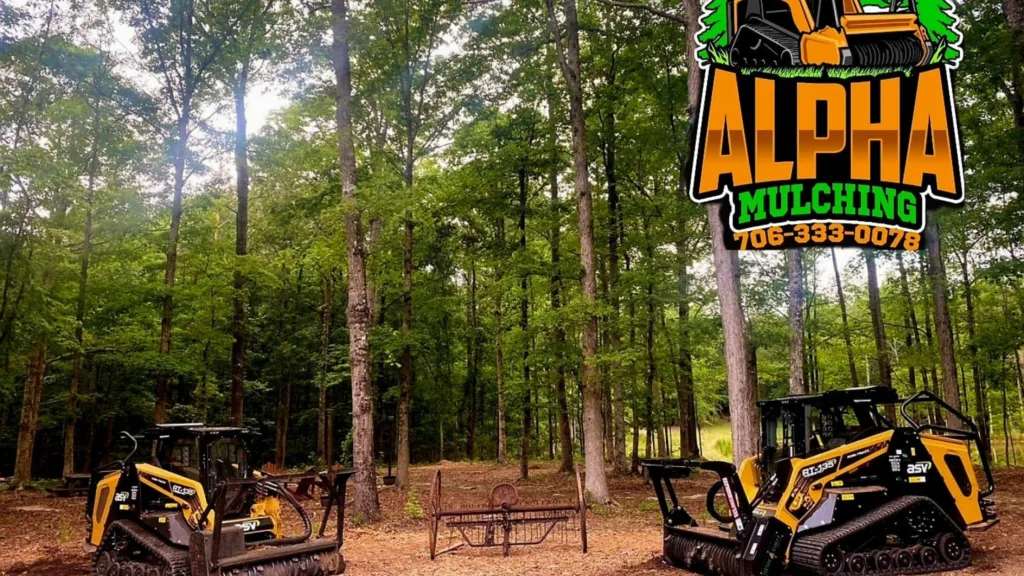
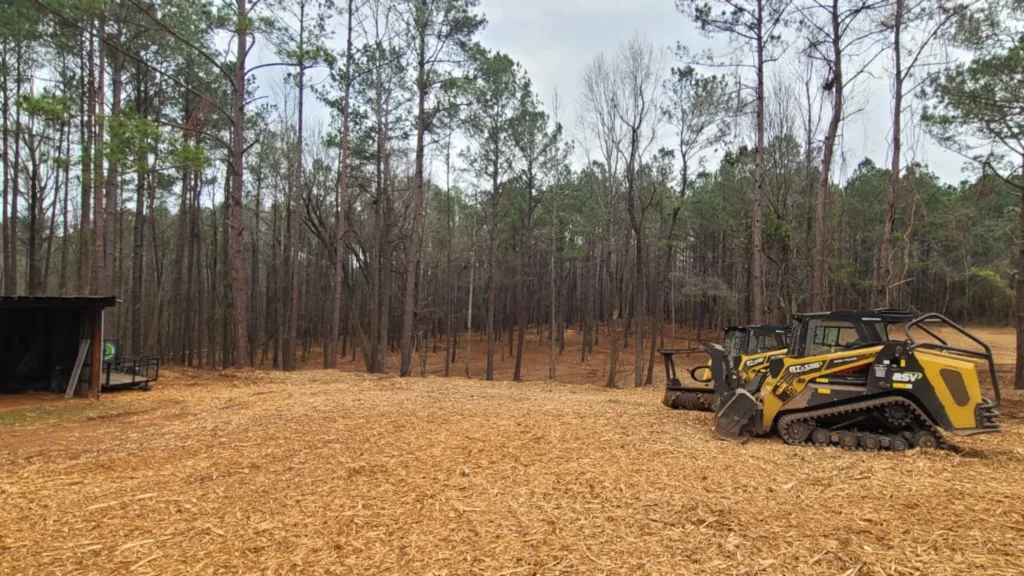
Forestry mulchers — either tracked units or skid-steer attachments — grind woody brush and small trees (up to 6–8 inches in diameter) directly into mulch that stays on site. This is the preferred method for soil health-conscious farmers because it eliminates windrow burning, returns organic matter to the soil surface, and causes significantly less topsoil disruption than bulldozing. A tracked forestry mulcher covers 2–5 acres per day in medium brush. For parcels under 5 acres, a skid-steer mulcher attachment rented for $400–$700 per day is often the most practical option.
Stump grinders and root rakes handle the residual work after initial clearing. Stump grinders remove individual stumps to 12–18 inches below grade — essential for row crop fields where root masses would obstruct tillage equipment. Root rakes attached to a dozer collect and windrow surface debris without scraping topsoil, preserving the organic layer that supports first-season crops.
For acreage guidance: parcels under 5 acres are best served by skid-steer attachments or compact track loaders; 5–20 acres typically justify a mid-size tracked mulcher or small dozer rental; parcels over 20 acres generally warrant hiring a dedicated land clearing contractor with full-size equipment.
Prescribed Burning: When Ash Becomes a Soil Amendment
Prescribed burning is the controlled application of fire to vegetation for a defined land management purpose. In agricultural contexts, it is most commonly used to clear dry brush, light timber, and accumulated grass biomass before plowing or seeding. When managed correctly, it is the lowest-cost clearing method available — and it delivers a measurable agronomic benefit.
Research published by the International Institute for Environment and Development (IIED) and cited in IUCN library resources demonstrates that ash deposited after a controlled burn releases significant quantities of potassium, calcium, phosphorus, and magnesium directly into the topsoil. This nutrient pulse can reduce fertilizer requirements in the first crop season by 15–25%, depending on the biomass volume burned. The effect is most pronounced in soils with a low baseline pH, where ash also acts as a liming agent.
The agronomic benefit of burning versus mechanical stacking and burning is meaningful. When debris is pushed into windrows and burned in concentrated piles, nutrients are lost to volatilization and the ash is deposited unevenly — only in the windrow footprint. A broadcast prescribed burn distributes nutrients uniformly across the entire cleared area.
Permitting requirements vary significantly by state. Most states require a burn permit from the state forestry agency or county fire marshal, a written burn plan, and notification of neighbors and local emergency services. Some states prohibit open burning entirely during drought conditions or fire weather watch periods. Contact your state forestry agency at least 30 days before your planned burn date.
Chemical and Manual Methods: Best for Small Acreage and Sensitive Soils
For parcels under 5 acres, near waterways, or on soils too steep or wet for heavy equipment, herbicide-based brush clearing and manual grubbing are the most practical and cost-effective options. These methods are also the most commonly discussed in practitioner forums like Reddit’s r/farming community, where dense woody brush on small parcels is a recurring challenge.
Herbicide brush control uses systemic herbicides — most commonly triclopyr or imazapyr — applied as basal bark treatments, cut-stump treatments, or foliar sprays to kill woody brush and prevent resprouting. Triclopyr is particularly effective on hardwood brush species including multiflora rose, autumn olive, and blackberry. A single treatment of basal bark triclopyr costs $150–$400 per acre in materials and eliminates the need for mechanical removal of the live root system, because dead roots decompose in place and improve soil porosity over time.
Manual grubbing using mattocks, brush axes, and hand-operated stump grinders is labor-intensive but causes zero soil compaction and is the only practical method in areas with overhead utilities, rocky soils, or terrain that excludes machinery. Slash-muck is the cheapest method of clearing land on a per-acre material basis, though labor costs make it expensive per hour.
The combination approach — herbicide first, mechanical cleanup second — is often the most cost-effective strategy for parcels under 10 acres with dense woody brush. Kill the brush chemically, wait 60–90 days for dieback, then use a small mulcher or brush hog to process the standing dead material into manageable debris.
How Much Does It Cost to Clear Land for Farming? Per-Acre Breakdown
Clearing land for farming typically costs $500 to $5,600 per acre depending on vegetation density and method. Light brush runs $500–$1,500 per acre using a forestry mulcher. Heavy timber with stump grubbing ranges from $2,000–$5,600 per acre. Prescribed burning is cheapest at $50–$150 per acre, where permits allow.
Here is a more detailed breakdown by vegetation category:
| Vegetation Type | Primary Method | Cost Per Acre |
|---|---|---|
| Light grass and brush (under 3 inches diameter) | Forestry mulcher or brush hog | $500–$1,500 |
| Medium brush and small trees (3–8 inches) | Tracked mulcher + stump grinder | $1,200–$2,500 |
| Heavy timber (8+ inches, merchantable) | Timber harvest + dozer grubbing | $1,500–$3,500* |
| Heavy timber (non-merchantable, hardwood) | Dozer grubbing + stump removal | $3,000–$5,600 |
| Dry brush and grass (burn-eligible land) | Prescribed burn | $50–$150 |
| Dense woody brush, small acreage | Herbicide + manual clearing | $400–$1,200 |
*Timber salvage value can offset clearing costs significantly. Merchantable pine or hardwood timber may generate $500–$2,000 per acre in stumpage revenue, effectively reducing net clearing cost to near zero on well-timbered parcels.
Equipment mobilization fees add $500–$2,500 to most contractor projects regardless of acreage, which is why per-acre costs drop sharply on larger parcels. A 5-acre project at $1,500/acre may cost $7,500 total; a 50-acre project at the same vegetation density may cost $900/acre due to mobilization cost spreading.
Factors That Drive Costs Up or Down on Your Property
Slope is the single largest cost multiplier for mechanical clearing. Slopes over 15% slow equipment significantly, increase fuel consumption, and raise operator safety risks — typically adding 20–40% to base clearing costs. Slopes over 30% may exclude wheeled equipment entirely, requiring tracked machines at a higher day rate.
Soil type and moisture affect how deeply equipment can work without causing compaction damage. Clay soils that are wet at clearing time can be compacted to a depth of 18–24 inches by heavy dozers, creating a hardpan layer that restricts root growth and drainage for years. Clearing wet clay soils costs more because it requires either waiting for dry conditions or using lighter equipment with lower ground pressure.
Proximity to waterways triggers buffer zone requirements in most states, restricting equipment operation within 50–100 feet of streams, rivers, and wetlands. Work in these zones requires hand clearing or low-impact equipment, which raises costs significantly.
Timber salvage value can be the difference between a $4,000/acre clearing bill and a net-zero project. Have a licensed timber cruiser assess merchantable volume before signing any clearing contract — timber harvesting first, then clearing the residual, is almost always more economical than clearing without a timber sale.
Permits, Environmental Regulations, and Wetland Restrictions
Land clearing near water requires federal authorization under Section 404 of the Clean Water Act, administered by the U.S. Army Corps of Engineers. Section 404 regulates the discharge of dredged or fill material into waters of the United States, which includes wetlands, streams, and certain seasonal water bodies. Clearing vegetation and pushing stumps into or adjacent to these areas constitutes a regulated activity. Violations carry civil penalties up to $25,000 per day and can require costly restoration work.
Most agricultural clearing projects qualify for Nationwide Permit 40 (Agricultural Activities), which provides a streamlined authorization pathway for farming operations that meet specific conditions — including minimal wetland impact and compliance with NRCS wetland conservation provisions. Pre-construction notification to the Corps is required for projects that affect more than 0.1 acres of wetlands.
State-level permits add another layer. Requirements vary by state but commonly include:
- Burn permits from the state forestry agency (required in nearly every state for prescribed burning)
- Stormwater discharge permits for clearing projects over 1 acre under EPA’s Construction General Permit (CGP) — this applies to agricultural clearing that disturbs more than 1 acre and has a point discharge to a water body
- Endangered species review if the parcel falls within known habitat for listed species under the Endangered Species Act
NRCS wetland conservation compliance (Swampbuster) is separate from Section 404. A farmer can obtain a Section 404 permit from the Army Corps and still trigger Swampbuster provisions that affect USDA program eligibility. Both agencies must be consulted independently before clearing wetland-adjacent land.
Protecting Topsoil and Soil Health During and After Clearing
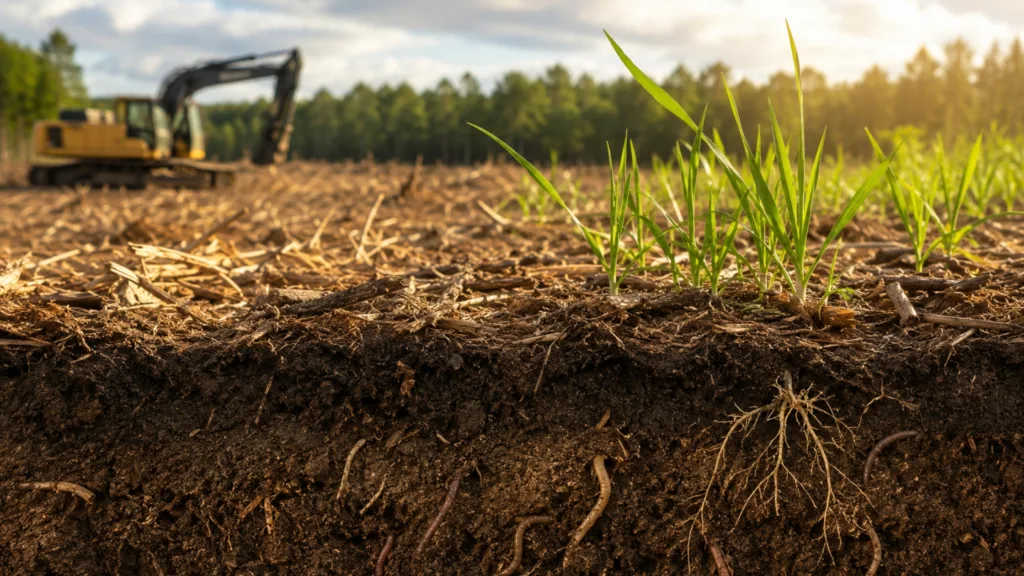
Topsoil integrity is the most undervalued asset in any land clearing project. The top 6 inches of soil contain 90% of the soil biology — bacteria, fungi, earthworms, and organic matter — that drives nutrient cycling, water infiltration, and long-term crop productivity. Mechanical clearing operations that scrape or invert this layer can reduce soil productivity for 5–10 years.
The single most important protective practice is keeping heavy equipment off wet soils. Soil compaction under wet conditions is largely irreversible without deep tillage (subsoiling), which adds $80–$150 per acre to post-clearing preparation costs. Schedule clearing operations during dry periods and use tracked equipment with low ground pressure whenever possible.
Erosion control must begin the day clearing ends. Bare, disturbed soil loses topsoil at rates 10–100 times higher than vegetated land. Immediate practices include:
- Seeding a fast-establishing cover crop (cereal rye, oats, or annual ryegrass) within 14 days of clearing completion
- Installing silt fences or sediment logs along downslope field edges
- Leaving mulched material from forestry mulching on the soil surface rather than raking it off
Cover cropping after clearing serves three functions simultaneously: it controls erosion, begins rebuilding organic matter, and suppresses weed pressure before the primary crop is established. Cereal rye planted at 100–120 lbs/acre is the most widely used post-clearing cover crop in the eastern U.S. because it establishes quickly in cool conditions and produces high biomass.
Soil testing should occur 60–90 days after clearing, not before. Clearing disturbs soil layers and changes pH and nutrient dynamics. A post-clearing soil test gives you an accurate baseline for lime and fertilizer applications before the first crop season.
Step-by-Step: Planning Your Land Clearing Project From Survey to First Crop
A successful land clearing project follows a defined sequence. Skipping steps — especially the regulatory review — creates problems that are far more expensive to fix than to prevent.
Step 1: Site Assessment
Walk the entire parcel and map vegetation types, slope zones, drainage patterns, and any wet areas. Identify trees with potential timber value. Note any streams, ponds, or seasonally wet areas that may trigger wetland regulations. This assessment takes one to two hours and informs every decision that follows.
Step 2: Regulatory Review
Contact your NRCS field office to determine whether the parcel includes HEL or wetlands. Submit a wetland determination request if any wet areas are present. Check state burn permit requirements if prescribed burning is a candidate method. Verify whether the project triggers Section 404 notification requirements.
Step 3: Timber Assessment (If Applicable)
Hire a licensed timber cruiser to assess merchantable timber before signing any clearing contract. A timber sale can offset clearing costs by $500–$2,000 per acre on well-stocked parcels.
Step 4: Method Selection and Contractor Hiring
Select your clearing method based on the comparison table above. Obtain at least three contractor bids that specify equipment, debris handling methods, and per-acre pricing. Verify that contractors carry liability insurance and understand NRCS Practice 460 requirements if you plan to pursue cost-share funding.
Step 5: Debris Management Planning
Decide in advance whether debris will be burned in windrows, chipped and spread, or hauled off site. Forestry mulching eliminates this decision by processing debris in place. Windrow burning requires a burn permit and produces uneven nutrient distribution. Chipping and spreading is the most agronomically beneficial option where equipment is available.
Step 6: Clearing Operations
Execute clearing in the correct sequence: timber harvest first, then mechanical grubbing or mulching, then stump grinding in crop fields. Protect topsoil by restricting heavy equipment access during wet conditions.
Step 7: Post-Clearing Soil Preparation
subsoil or deep-till compacted areas. Apply lime based on soil test results (allow 3–6 months for lime to react before planting if pH is significantly low). Establish an erosion control cover crop within 14 days.
Step 8: Soil Testing and First-Season Planting
Conduct a comprehensive soil test 60–90 days after clearing. Apply amendments and fertilizer based on the results. Most cleared land can support a first crop 3–6 months after clearing, depending on stump decomposition, lime reaction time, and drainage establishment.
Glossary
USDA NRCS Conservation Practice Standard 460 — The federal standard defining requirements for land clearing activities that qualify for NRCS technical and financial assistance, including conditions for soil protection, debris management, and wetland avoidance.
Bulldozer grubbing — The use of a bulldozer equipped with a root rake or grubbing blade to push out stumps and root masses from cleared ground, typically used after timber harvesting on land being converted to row crops.
Forestry mulcher — A tracked or skid-steer-mounted machine with a rotating drum head that grinds trees and brush up to 8 inches in diameter into wood chip mulch, leaving the material on site to decompose.
Section 404 Clean Water Act — The federal provision administered by the U.S. Army Corps of Engineers that regulates discharge of fill material into waters of the United States, including wetlands — requiring permits for land clearing activities near water bodies.
Prescribed burning — A controlled fire applied to vegetation under defined weather and fuel conditions to clear biomass, release nutrients from ash into topsoil, and prepare the ground for cultivation or pasture establishment.
Cover cropping — The practice of seeding fast-establishing plant species immediately after land disturbance to protect exposed topsoil from erosion, suppress weeds, and begin rebuilding soil organic matter before the primary crop is planted.
Highly Erodible Land (HEL) — Land classified by NRCS as having a high erosion potential based on soil type, slope, and climate — is subject to Sodbuster provisions that restrict clearing and tillage practices to maintain USDA program eligibility.
Swampbuster — A provision of the 1985 Farm Bill that denies USDA program benefits to producers who convert wetlands to agricultural production, enforced through NRCS wetland conservation compliance determinations.
Stump grinder — A machine that removes tree stumps by grinding them to 12–18 inches below grade, essential for crop fields where residual root masses would obstruct tillage and planting equipment.
EQIP (Environmental Quality Incentives Program) — A USDA cost-share program that provides financial and technical assistance to farmers implementing conservation practices, including land clearing activities, that meet Practice 460 standards.
FAQs
1. How much does it cost to clear land for farming per acre by vegetation type?
Light brush costs $500–$1,500 per acre using a forestry mulcher. Medium brush and small trees run $1,200–$2,500 per acre. Heavy non-merchantable timber with full stump removal costs $3,000–$5,600 per acre. Prescribed burning is cheapest at $50–$150 per acre where state permits allow. Merchantable timber sales can offset costs by $500–$2,000 per acre on well-stocked parcels.
2. What permits do I need before clearing agricultural land in the US?
At a minimum, check for three things: a Section 404 Clean Water Act authorization from the U.S. Army Corps of Engineers if your land is near wetlands or waterways, a state burn permit if you plan to use prescribed burning, and an NRCS wetland and HEL determination to protect your USDA program eligibility. Projects disturbing more than 1 acre with a point discharge to water may also need an EPA stormwater permit.
3. What is the cheapest method of clearing land for small farms under 10 acres?
Prescribed burning is cheapest at $50–$150 per acre where permitted. For parcels where burning is not allowed or practical, the herbicide-first approach — applying triclopyr or imazapyr to kill woody brush, then using a brush hog or small mulcher on the dead material — typically costs $400–$1,200 per acre and causes minimal soil disturbance. Manual grubbing has the lowest material cost but a high labor cost per acre.
4. How do I clear land with dense woody brush without destroying topsoil?
Use a forestry mulcher rather than a bulldozer. Mulchers grind brush in place, leaving wood chip material on the soil surface as organic matter rather than scraping and inverting the topsoil layer. Avoid operating any heavy equipment on wet soils. For brushes under 4 inches in diameter, a herbicide-first approach followed by mulching of dead material is the most soil-friendly option available.
Does land clearing qualify as agriculture under USDA definitions?
Yes, when the purpose is to establish or improve land for crop production, hayland, or pasture. USDA NRCS Conservation Practice Standard 460 specifically recognizes land clearing as a conservation practice when it meets defined resource protection criteria. However, clearing that converts wetlands or highly erodible land without an approved conservation plan does not qualify and can trigger compliance violations affecting all USDA program benefits.
5. How does USDA NRCS Practice Standard 460 affect my eligibility for cost-share programs?
Practice 460 is the gateway standard for USDA cost-share funding on land clearing projects. Clearing activities that meet Practice 460 requirements can qualify for EQIP cost-share at 50–75% of actual costs. Clearing activities that violate Practice 460 — particularly those involving wetland conversion or HEL disturbance without an approved plan — can trigger Swampbuster or Sodbuster provisions that suspend eligibility for all USDA commodity and conservation programs until the violation is resolved.
6. How long after clearing land can I plant the first crop?
Most cleared land supports a first crop 3–6 months after clearing operations are complete. The timeline depends on three factors: lime reaction time (3–6 months if soil pH needs significant correction), stump decomposition (stumps left in the ground do not prevent planting between rows but do complicate tillage), and drainage establishment. Planting a cover crop immediately after clearing accelerates soil recovery and allows you to plant a primary crop the following season with better results than planting directly into freshly cleared ground.