I. Reclaiming Your Georgia Property
Owning land in Georgia offers incredible opportunities, from building a custom dream home to cultivating a commercial investment or simply enjoying a recreational retreat. However, the region’s lush, humid climate means that vegetation grows aggressively. What starts as a few innocent vines can quickly turn into an impenetrable wall of underbrush, rendering valuable acreage unusable. For property owners, the challenge isn’t just about cutting grass; it’s about reclaiming the land from nature’s relentless grip.
At Alpha Mulching, we understand that every plot of land has potential waiting to be uncovered. Whether you are dealing with an overgrown backyard in the suburbs, managing hundreds of acres of forestry for a new development, or maintaining utility easements, the method you choose to clear that land matters. It affects your budget, the project timeline, the safety of your workers, and the long-term health of your soil.
In this comprehensive guide, we will walk you through the most effective strategies for land management. We will explore the differences between traditional “scrape and burn” clearing and modern forestry mulching, helping you decide which solution aligns with your goals. Our mission is simple: to provide reliable, efficient, and eco-conscious services that get the job done right the first time.
II. Understanding the Basics: What is Professional Land Clearing?
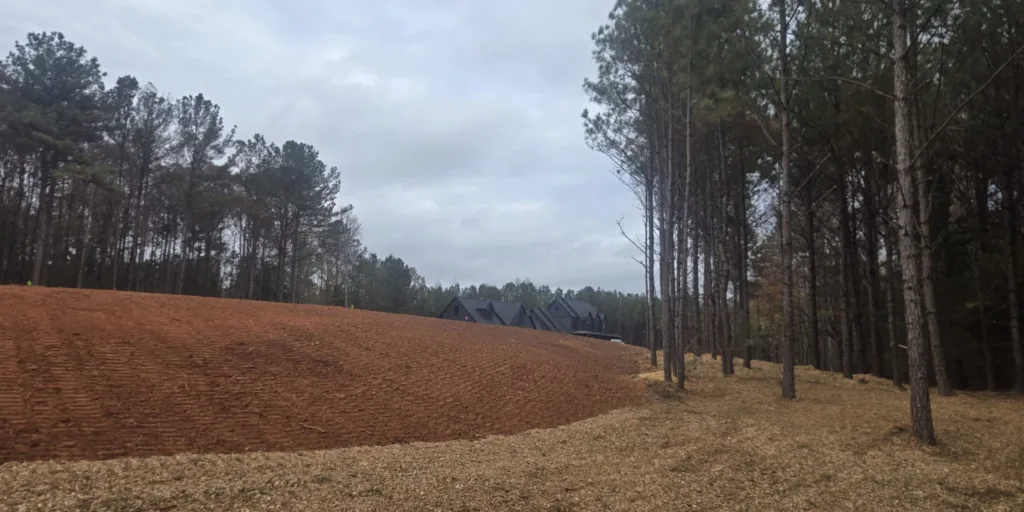
When most people hear “land clearing,” they imagine a chaotic scene of bulldozers scraping the earth bare, leaving behind a scarred landscape. While that is one traditional method, professional Land Clearing has evolved into a sophisticated process tailored to the specific needs of the project. It is the critical first step in site preparation for construction, agriculture, or real estate development. Without proper clearing, surveyors cannot measure the lot, architects cannot plan the layout, and builders cannot break ground.
The Three Phases of Clearing
Professional clearing isn’t a singular event; it is a workflow designed to prepare the land for its next purpose:
- Access & Assessment: Creating initial paths for equipment to enter and evaluating hazards like steep slopes or hidden debris.
- Vegetation Removal: The physical removal of trees, brush, and undergrowth. This can range from selective thinning to a complete clear-cut.
- Grubbing & Grading: Removing root balls (grubbing) to prevent sinkholes later, and leveling the dirt (grading) to ensure proper water drainage.
Why Professionalism Matters
Attempting to clear dense vegetation with consumer-grade equipment—like renting a small skid steer or using a chainsaw—often leads to frustration, injury, and wasted time. Professional clearing involves assessing the terrain, identifying protected tree species, and managing water runoff to comply with EPA regulations. In the context of vegetation management in Georgia, dealing with invasive species requires a strategic approach to ensure they don’t return immediately after the crew leaves.
Alpha Mulching approaches land clearing with a focus on efficiency and safety. We utilize equipment capable of handling rough terrain and heavy overgrowth, ensuring that the land is left level and accessible. This isn’t just about removing trees; it’s about preparing a canvas for your vision. Whether it’s a right-of-way maintenance project or a residential lot prep, the goal is to leave a clean slate that is ready for the next phase of development.
For a deeper dive into the specific steps, machinery, and logistics of preparing a site for success, including the permit process and grading requirements, we recommend reading our detailed guide on [Professional Land Clearing].
III. The Game Changer: Forestry Mulching Explained
While traditional land clearing often involves cutting, hauling, and burning—processes that can disturb the soil structure and anger neighbors with smoke—there is a modern alternative that is gaining immense popularity: Forestry Mulching. This technique has revolutionized the industry by offering a single-step solution that clears land while simultaneously nurturing it.
How the Technology Works
Forestry mulching utilizes a specialized machine equipped with a high-flow rotary drum and steel teeth, often referred to as a masticator. This powerful equipment grinds trees, brush, and stumps right down to the ground level. Instead of hauling debris away in truckloads (which adds to the cost and carbon footprint), the vegetation is converted into a nutrient-rich mulch layer that is left on the forest floor.
The Ecological Advantage
This method is the cornerstone of eco-friendly land management.
- Soil Preservation: The mulch layer acts as a natural barrier, suppressing the growth of weeds and invasive species while retaining soil moisture. This is particularly vital in Georgia, where heavy rains can cause massive soil erosion on bare ground.
- Root Protection: By leaving the root systems of larger, “keeper” trees intact and covering the soil with mulch, we prevent erosion and promote the health of the remaining vegetation. The feeder roots of your oak and pecan trees are not ripped up, ensuring they survive the clearing process.
Efficiency and Cost-Effectiveness
Because forestry mulching eliminates the need for multiple machines (like bulldozers, excavators, and dump trucks) and avoids the permitting headaches associated with burning, it is often a more cost-effective choice for underbrush removal services. It allows the landowner to selectively clear specific areas while leaving desirable trees unharmed, creating a park-like aesthetic almost instantly.
To understand the science behind this technique, the environmental benefits, and why it is the eco-friendly way to clear your land, check out our specific article on [Forestry Mulching 101].
IV. Georgia-Specific Challenges: Why Local Expertise Matters
Land clearing in the Pacific Northwest is different from clearing in Texas, and vastly different from clearing here in Georgia. Our unique environment presents specific challenges that require local expertise.
Battling the Red Clay
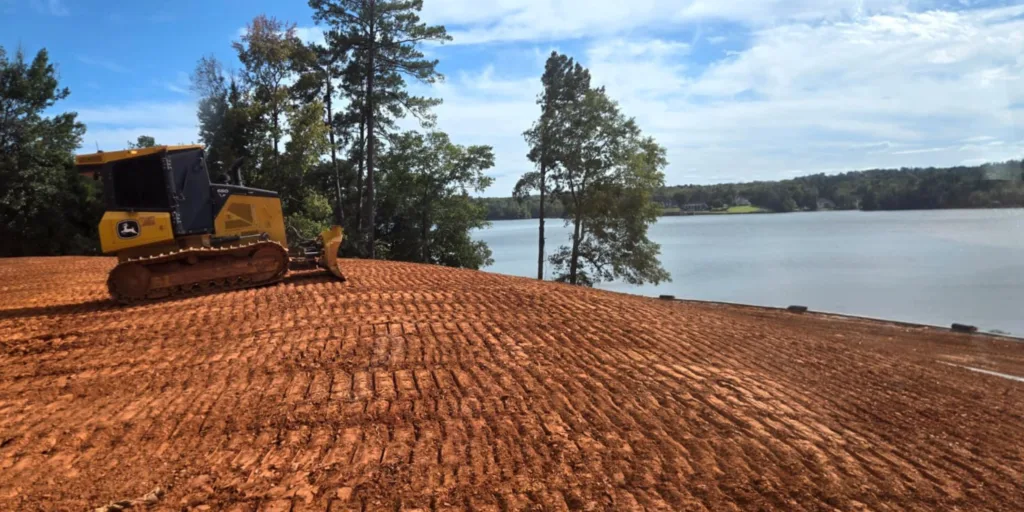
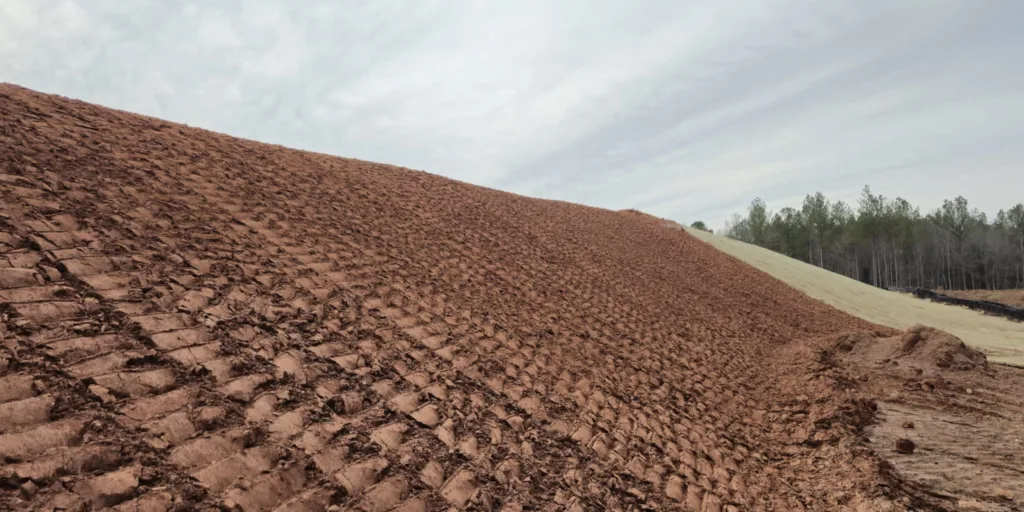
Georgia is famous for its red clay. When dry, it is as hard as concrete; when wet, it is a slippery, sticky mess that can swallow heavy machinery.
- The Challenge: Traditional bulldozers can easily get bogged down or create deep ruts that ruin the grading of the land.
- The Alpha Solution: We use tracked mulchers with low ground pressure. This allows us to “float” over the clay rather than churning it up, preserving the integrity of the ground even during wetter seasons.
The War on Invasive Species
Our warm climate is a haven for aggressive plants.
- Kudzu: Known as “the vine that ate the South,” it can grow a foot a day, smothering trees.
- Chinese Privet: Forms dense thickets that are impossible to walk through.
- Muscadine Vines: These can strangle mature trees, pulling down heavy branches.
Standard cutting does not work on these species; they simply grow back. Forestry mulching is particularly effective here because it shreds the plant material down to the stalk, severely stunting regrowth and creating a layer of mulch that suppresses new sprouts.
V. When the Going Gets Tough: Heavy-Duty Mulching Applications
Not all overgrowth is created equal. While standard forestry mulching handles typical brush and saplings, some terrain requires a more aggressive approach. Heavy Duty Mulching is the answer when you are facing dense, established vegetation or challenging topography that standard equipment simply cannot handle.
Industrial Applications
At Alpha Mulching, we deploy high-performance machinery designed to tackle the most stubborn landscapes.
- Commercial Site Development: Time is money on a commercial project. Heavy-duty mulchers can clear large acreages rapidly, keeping your development schedule on track without the delays of traditional clearing methods.
- Right-of-Way Clearing: Maintaining access for utility lines, pipelines, and roads often involves navigating uneven ground and thick woody debris. Our equipment provides the torque and stability needed to clear these corridors safely and effectively.
Safety in High-Intensity Zones
Safety is paramount in these operations. When grinding hardwoods at high RPMs, debris can fly at dangerous speeds. We utilize machines with enclosed cabs, reinforced safety glass (polycarbonate), and specialized forestry protection structures. This allows us to work close to buildings or roads without risking injury to the operator or bystanders.
If you are facing dense overgrowth or a large-scale project that demands serious muscle, learn more about our capabilities in our dedicated post on [Heavy-Duty Mulching].
VI. Why You Need Powerful Mulching Solutions
In the world of land management, efficiency is the ultimate goal. You want your property reclaimed quickly, but not at the expense of quality. This is where Powerful Mulching Solutions bridge the gap. It is not just about the horsepower of the machine; it is about the expertise behind the controls.
The Speed Factor
Why choose a powerful, integrated solution over piecemeal services?
- High-Flow Hydraulics: Our machines utilize high-flow hydraulic systems that deliver consistent power to the cutting head. This means the drum doesn’t stall when it hits a thick stump; it powers through.
- Instant Results: We can process trees up to 8-10 inches in diameter in seconds. This means we can finish in days what might take a manual crew weeks to complete.
The “One-Pass” Finish
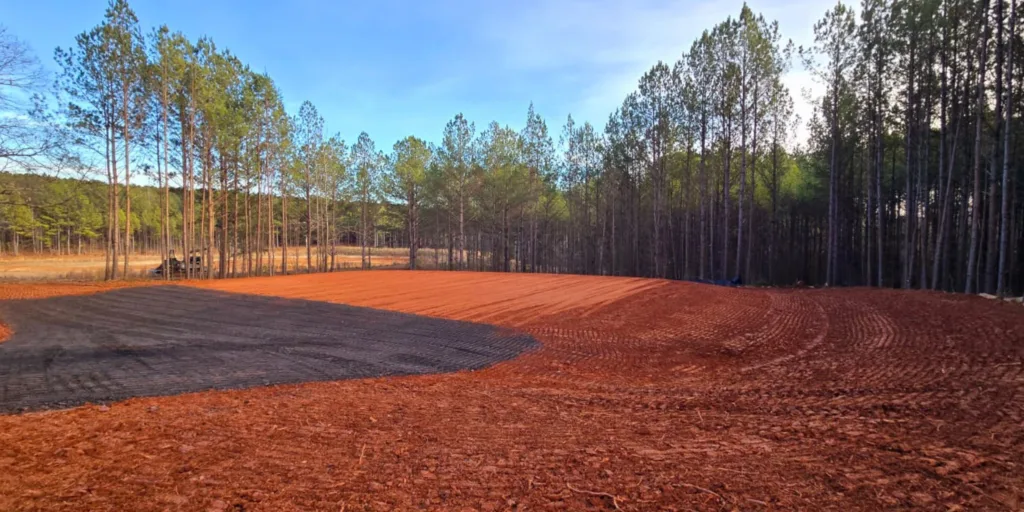
Lower-powered machines often have to drive over the same brush three or four times to mulch it effectively. This wastes time and compacts the soil. Powerful mulchers achieve a fine grind in a single pass. This leaves a manicured look immediately, increasing the visual appeal of the property for potential buyers or developers.
Discover how we deliver maximum speed without sacrificing quality in our article on [Powerful Mulching Solutions].
VII. Cost Comparison: Mulching vs. Traditional Clearing
One of the most common questions we receive is regarding cost. While every project is unique, understanding the cost structure helps in decision-making.
The Traditional Method Costs
- Machine Rental: You need a bulldozer and an excavator.
- Labor: Requires multiple operators.
- Hauling Fees: This is the hidden killer. Trucking debris to a landfill is expensive due to fuel and tipping fees.
- Restoration: After the bulldozer tears up the ground, you often have to pay for fill dirt and grading to fix the damage.
The Alpha Mulching Method Costs
- Single Fee: You pay for the machine and operator time.
- No Hauling: The debris stays on site as mulch (free material).
- No Restoration: The ground is left level and covered, often requiring no further grading.
In many cases, specifically for lots under 10 acres, forestry mulching can be 30-50% cheaper than traditional clearing when you factor in the elimination of hauling and dumping fees.
VIII. Conclusion: Your Partner in Land Transformation
Your land is a valuable asset, but only if it is accessible and usable. Whether you need to clear a backyard for a garden or prep a commercial lot for construction, the difference lies in the method you choose.
By opting for professional forestry mulching with Alpha Mulching, you are choosing a path that is:
- Sustainable: protecting your soil and native trees.
- Efficient: saving you time and money.
- Aesthetically Pleasing: leaving a clean, park-like finish immediately.
Ready to Reclaim Your Property? Don’t let overgrowth dictate how you use your land. Contact Alpha Mulching today. Our team is ready to assess your property and provide a free estimate tailored to your specific needs. Let’s turn that tangle of brush into a beautiful, usable space.
IX. Frequently Asked Questions (FAQ)
Q: Can you mulch in the rain?
A: Yes, to an extent. Because our tracked machines have low ground pressure, we can work in wetter conditions than heavy bulldozers. However, for the best finish and soil health, we avoid working in deep mud to prevent rutting.
Q: How big a tree can you mulch?
A: Our heavy-duty equipment can efficiently grind trees up to 8-10 inches in diameter. For trees larger than that, we often recommend manual felling followed by mulching the stump and branches.
Q: Do I need a permit for forestry mulching?
A: In most Georgia counties, forestry mulching does not require a land disturbance permit because we are not changing the grade of the land or installing impervious surfaces. However, we always recommend checking local regulations, especially near streams or wetlands.
Q: Will the grass grow back through the mulch?
A: Eventually, yes. The mulch suppresses weeds initially, but as it breaks down, it creates fertile soil. If you want grass, you can seed directly over the mulch or wait for it to decompose.
Forestry Mulching vs. Traditional Land Clearing: Which Is Better?
For most Georgia properties, forestry mulching is the better choice — it’s faster, cheaper, and easier on your land. Traditional clearing with bulldozers only makes sense when stumps and roots must be completely removed, such as under a building footprint. Here’s the side-by-side:
| Forestry Mulching | Traditional Clearing (Bulldozer) | |
|---|---|---|
| Speed | 1–4 acres per day, one machine | Slower; multiple machines and phases |
| Typical cost | $800–$2,500 per acre, no disposal fees | Higher; adds hauling, burning & disposal |
| Topsoil | Preserved; mulch layer prevents erosion | Scraped bare; erosion risk on Georgia clay |
| Debris | None — ground into mulch on site | Burn piles or haul-off required |
| Stumps & roots | Ground to grade; roots remain | Fully removed |
| Best for | Brush, underbrush, small trees, pasture, trails, visibility | Building pads, foundations, total root removal |
Verdict: choose forestry mulching for clearing overgrowth, reclaiming land, and site cleanup; choose traditional clearing only where construction requires stump and root removal. Many projects combine both — mulch the majority, dig only the building footprint. Not sure which your project needs? Call 706-333-0078 and we’ll advise for free.