Every neglected property tells the same story. First the mowing stopped. Then the blackberry and privet moved in. A few seasons later, sweetgum and pine saplings shot up through the tangle, vines climbed the fence line, and now you can’t walk your own land — much less use it, sell it, or build on it. If that sounds familiar, this article is for you. Here’s how overgrown property clearing works, what it costs, and why the method you choose matters more than most people realize.
Why Overgrown Land Gets Worse Every Year
Overgrowth compounds. A lot that would have taken an afternoon to mow five years ago now holds thousands of woody stems per acre, and each year those stems get thicker and harder to remove. In Georgia’s growing season, privet alone can put on several feet of growth, and once saplings pass about two inches in diameter, a regular brush cutter can no longer handle them. The window where a property can be “tidied up” closes fast — after that, it needs real equipment.
There are practical costs to waiting, too. Overgrown parcels attract snakes, rats, and ticks; they hide dumping and trespassing; they create a genuine fire hazard in dry months; and they drag down both curb appeal and appraised value. Neighbors notice — and in some areas, code enforcement does as well.
The Three Ways to Clear Overgrown Land
1. Hand clearing. Chainsaws, brush cutters, and a lot of weekends. It works for light growth, but for a genuinely overgrown acre you’ll spend weeks cutting and still face a mountain of debris that has to be burned, chipped, or hauled. Most owners who start this route call a professional halfway through.
2. Bulldozing. Fast, but blunt. A dozer removes everything — including the topsoil, the trees you wanted to keep, and the root structure holding your land in place. You’re left with bare red clay that erodes with the first hard rain, plus push piles that must be burned or hauled at extra cost. It has its place in construction, but for reclaiming a property it’s usually overkill.
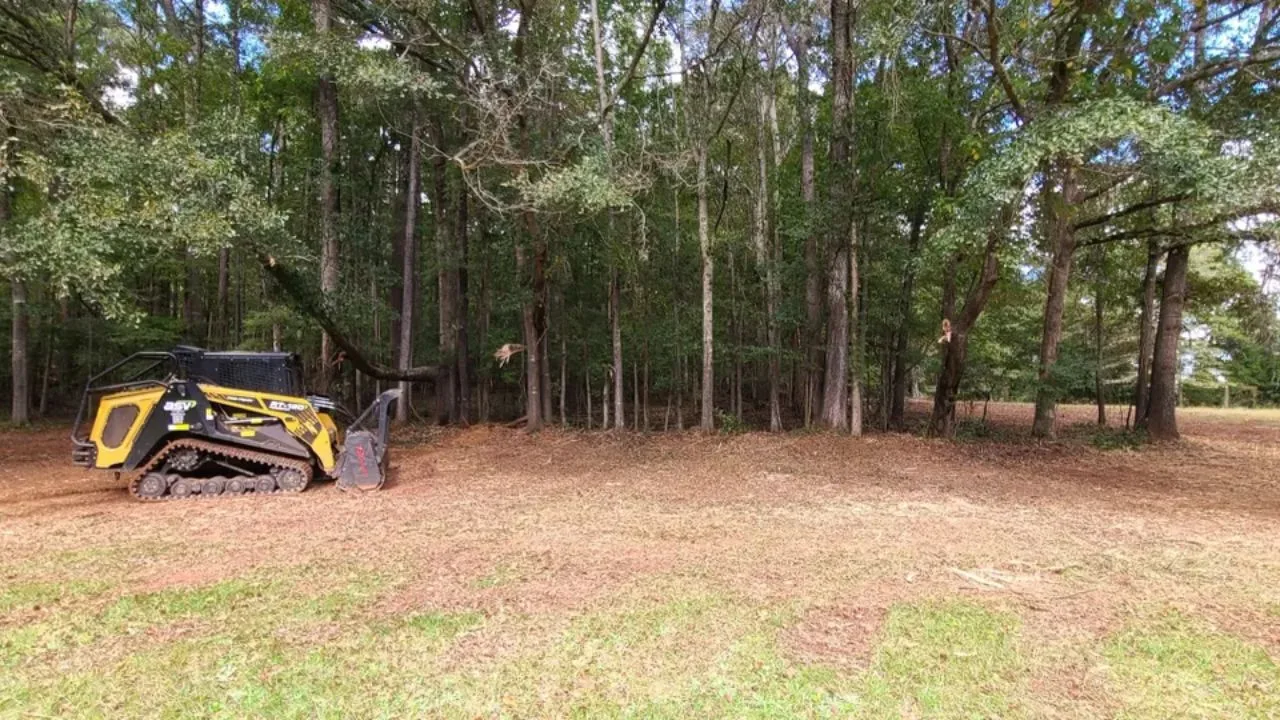
3. Forestry mulching. One machine grinds brush, vines, and saplings into a layer of mulch, right where they stand. Nothing is hauled away and nothing is burned, because the debris becomes the ground cover. Mature trees stay. Topsoil stays. The property goes from jungle to park-like in a day or two.
What Your Property Looks Like Afterward
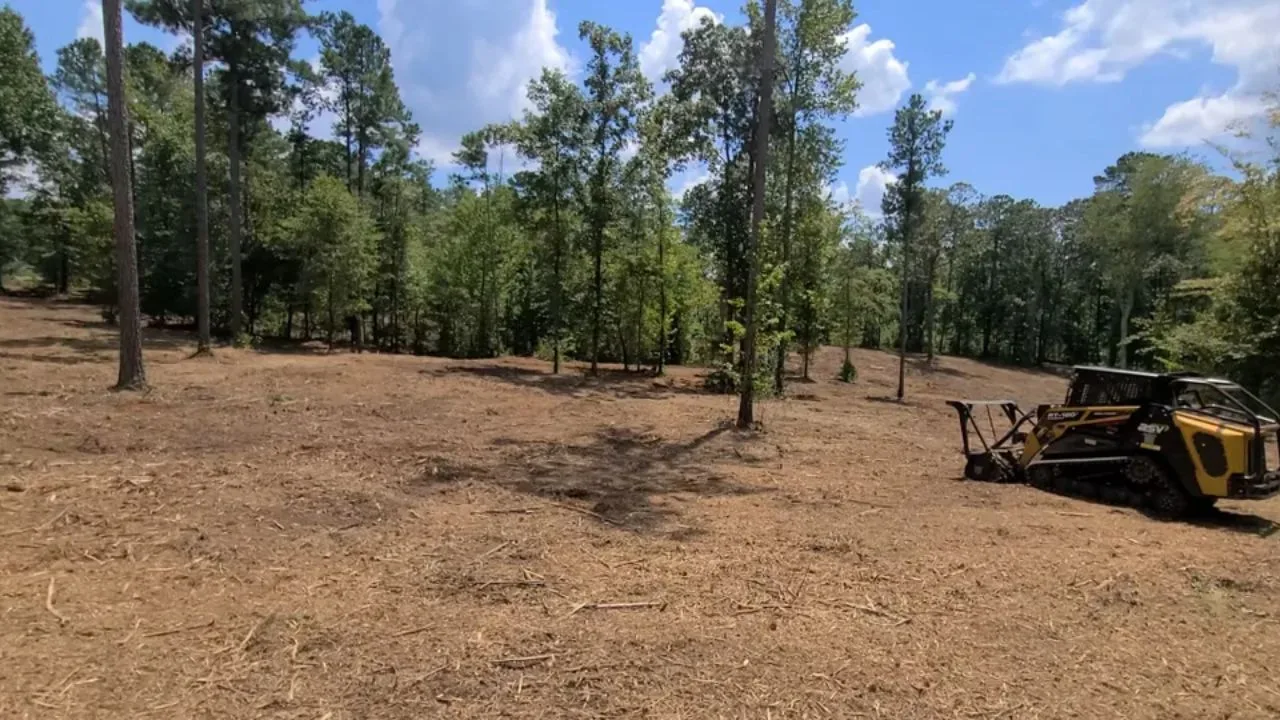
People are often surprised by the finish. Mulched land isn’t scraped or muddy — it’s covered in a clean, even layer of wood mulch with your good trees standing free of the tangle that surrounded them. You can walk every corner of the parcel immediately. Grass typically comes back through the mulch within a season, and in the meantime the layer suppresses the regrowth of the very brush that was just removed while feeding nutrients back into the soil as it breaks down.
- Walkable the same day — no stumps at trip height, no push piles, no ruts
- Erosion protection — the mulch blanket holds soil through Georgia downpours
- Slower regrowth — mulch shades out the seed bank that bare dirt invites
- Instant curb appeal — the single fastest visual upgrade an overgrown property can get
What It Costs and How Long It Takes
For a typical overgrown property in west Georgia, forestry mulching runs $800 to $2,500 per acre depending on the density of growth and the terrain — see our cost per acre breakdown for the full picture. Density is the biggest variable: a lot with scattered brush sits at the bottom of the range, while a wall of privet and four-inch saplings sits at the top. A machine typically clears one to four acres per day, which means most residential reclaim jobs are finished in a single visit.
Compare that with the alternative math: dozer work plus debris hauling plus topsoil repair regularly costs more than mulching — and takes longer once cleanup is counted. Mulching’s single-machine, zero-haul-off approach is why it has become the default choice for reclaiming neglected land.
How to Prepare for Clearing Day
A little preparation makes the job faster and the result better. Before the machine arrives, walk the property and tie flagging tape around any tree you want to keep — dogwoods and young oaks hiding inside the brush are easy to save when they’re marked and easy to lose when they aren’t. Locate and flag anything buried or hidden: septic tanks and field lines, well heads, irrigation, old fence wire, and property corner pins. Decide how you want the finish to look, too: some owners want every stem ground flush for a lawn-ready surface, while others prefer to leave pockets of screening brush along the road or a neighbor’s side for privacy.
Think about access as well. A forestry mulcher travels on tracks and can pass through a standard gate, but the day goes smoother when a parking spot for the trailer and a clear route onto the property are sorted out in advance. None of this is required — we handle jobs where the owner lives out of state and has never seen the parcel — but an hour of walking and flagging turns a good result into a perfect one.
Common Situations We Clear Every Week
- Inherited land that hasn’t been touched in a decade
- Backyards that shrank as the woods advanced year after year
- Fence lines and property boundaries swallowed by brush and vines
- Lots purchased for a future build that need to be opened up and evaluated
- Parcels being listed for sale, where a cleared lot photographs — and appraises — dramatically better
Whatever the situation, overgrown lot clearing follows the same process: we walk the property with you (or review it remotely), flag the trees and features you want protected, quote a firm price, and clear it. Alpha Mulching serves Columbus, LaGrange, Newnan, Carrollton, and the entire west Georgia region — see our full land clearing services or find forestry mulching near you.
Frequently Asked Questions
How much does it cost to clear an overgrown property?
Most overgrown lots in west Georgia cost between $800 and $2,500 per acre to clear with forestry mulching, depending on how thick the growth is and how easy the site is to access. Small residential lots are often quoted as a flat day rate. Estimates are free — call 706-333-0078.
Can I clear an overgrown property myself?
You can handle light brush with hand tools, but property that has been neglected for years — saplings over an inch thick, privet thickets, vines pulling down fences — will fight back faster than most owners can cut it. A forestry mulcher clears in one day what typically takes a homeowner an entire season, and it leaves no debris piles to deal with.
Will clearing an overgrown lot hurt my trees?
No — this is one of the biggest advantages of mulching over bulldozing. The machine works around mature trees you want to keep, removes only the brush and saplings, and the mulch layer actually protects tree roots and soil moisture.
Take Back Your Property
An overgrown lot never fixes itself — every season adds another year of growth to remove. The good news: no matter how far gone it looks, one machine and one day can usually bring it all the way back.
Ready to see your land again? Call or text 706-333-0078 for a free, no-obligation estimate anywhere in west Georgia, or request one online. Most projects are quoted within a day and scheduled within the week.