Ask any serious deer hunter what separates a mediocre lease from a great one and you’ll get the same answer: access, visibility, and food. All three come down to how well the land is managed — and with Georgia’s deer season opening in September, late summer is exactly when hunting properties get whipped into shape. Here’s how forestry mulching handles food plots, shooting lanes, and access trails, and why it beats a tractor and bush hog on hunting ground.
Food Plots: From Thicket to Planted in One Pass
The hardest part of establishing a new food plot isn’t planting — it’s getting from standing brush to workable ground. Cut it by hand and you’re left with stumps and slash. Push it with a dozer and you’ve destroyed the topsoil your clover and brassicas need, while leaving a berm of debris around the plot edge that deer treat with suspicion.
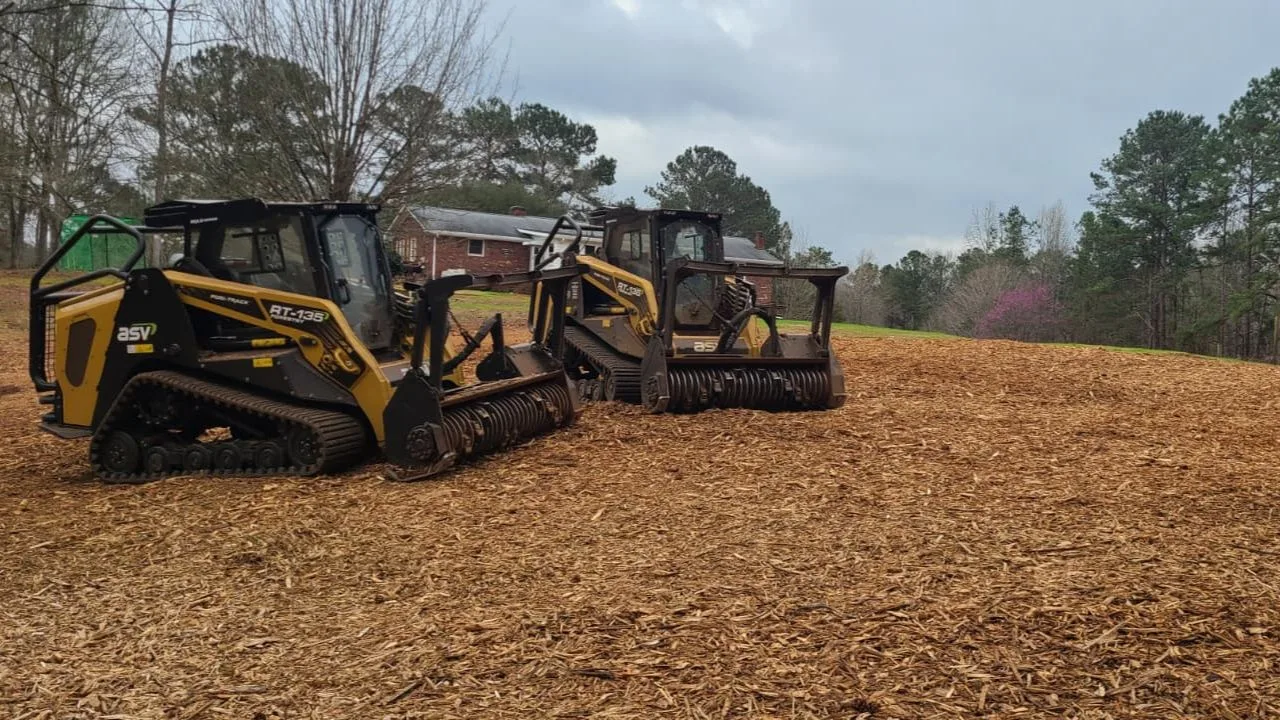
Professional food plot clearing with a forestry mulcher solves both problems at once. It grinds brush and saplings flush to the ground, turns them into a thin mulch that breaks down into the soil, and leaves the plot ready for discing or no-till drilling. The organic matter actually improves the seed bed — and because nothing is hauled off or burned, a half-acre kill plot deep in the timber can be created without ever opening a wide path to reach it.
Shooting Lanes That Deer Actually Use
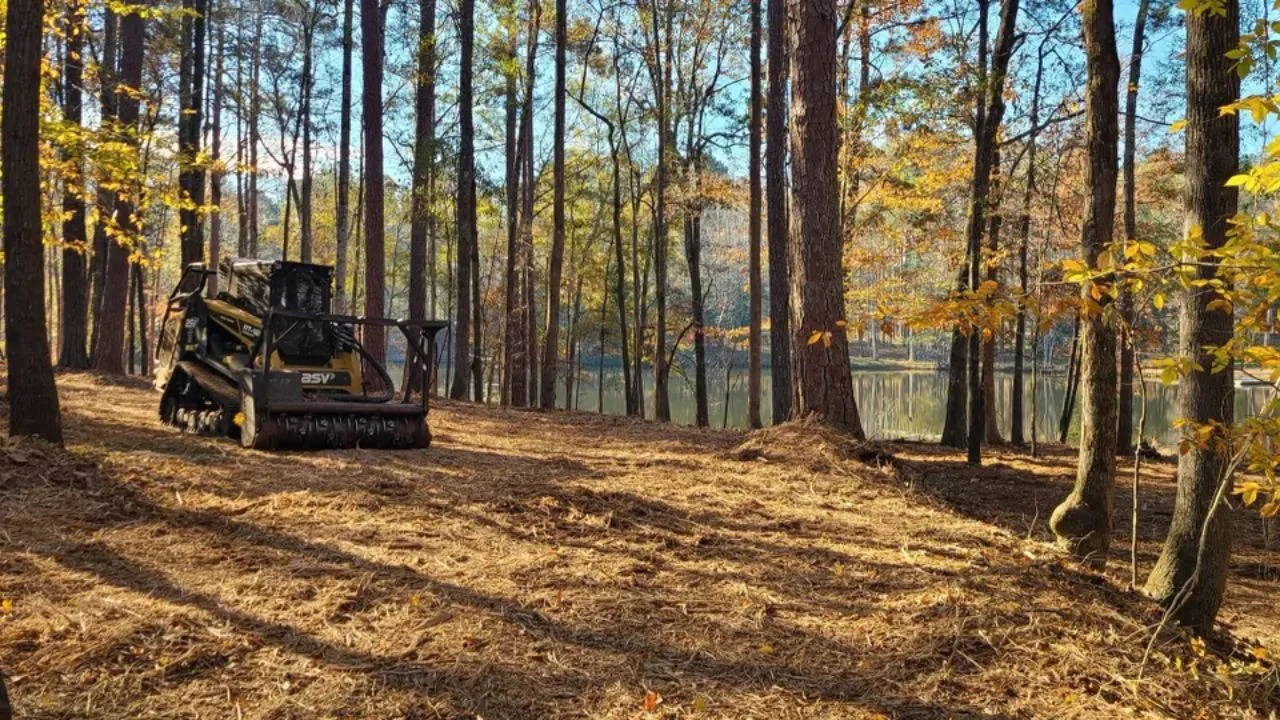
A shooting lane cut with a chainsaw looks like a hurricane came through: felled tops, hinge-cut trunks, and a debris field that deer skirt around for a season. Shooting lane clearing with a mulcher is different — clean, quiet ground from the stand to the far end, with nothing to deflect an arrow or stop a clear view. Because the floor is mulch instead of tangled slash, deer cross and even travel down the lanes, turning them into part of the property’s movement pattern rather than an obstacle in it.
Lanes also stay useful longer. The mulch layer slows regrowth, so a lane cut this August is still clean next August, needing only a light touch-up rather than a full re-cut.
Access Trails: Get In and Out Without Blowing Out the Woods
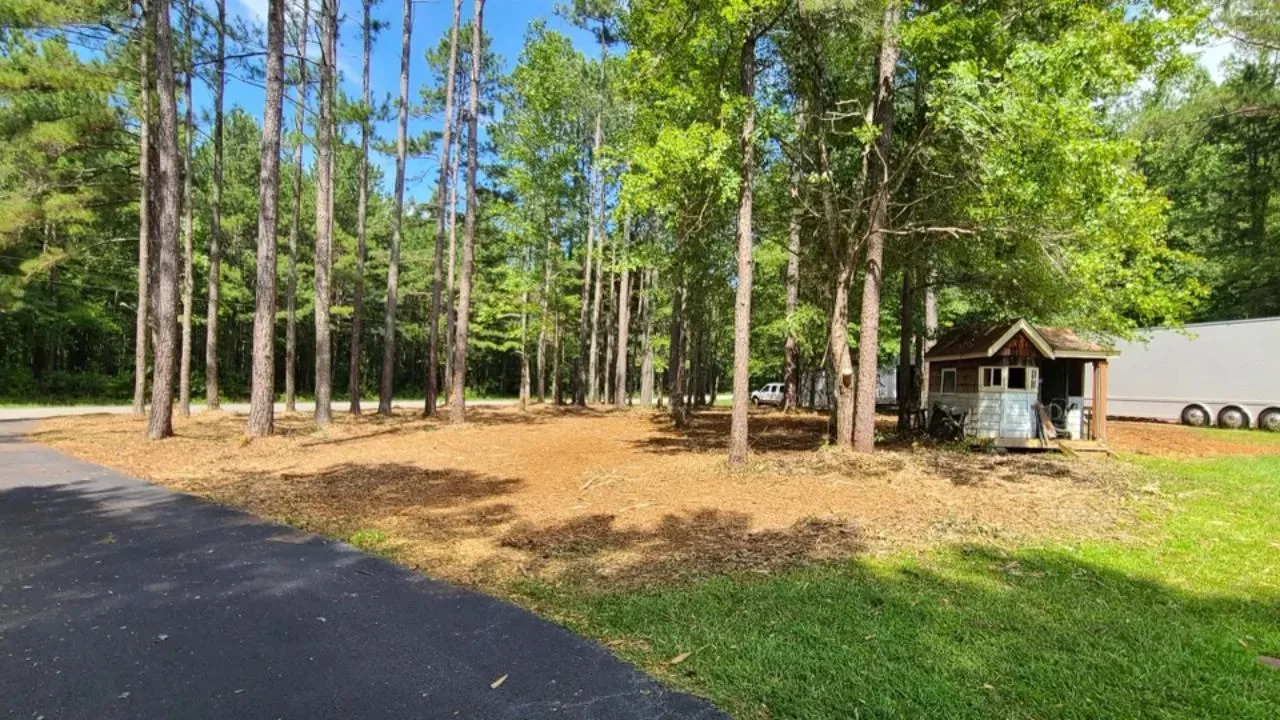
Every hunter knows the property is only as good as your ability to move through it silently. Mulched access trails let you reach stands with a quiet, brush-free walking path — no crunching through dry slash — and wide enough versions handle a UTV or tractor for hauling stands, feed, and harvested deer. Well-planned trails also work as firebreaks and property-line boundaries, and they open up parts of a lease that were effectively unreachable before.
The Habitat Case for Mulching
Good deer ground isn’t a clean park — it’s a mosaic. Thick bedding cover, open feeding areas, soft edges between them, and safe travel corridors connecting the pieces. Selective mulching is the tool that builds that mosaic:
- Edge creation — feathering the transition between timber and openings, where deer spend most of their daylight time
- Browse regeneration — mulched areas regrow with the tender, low forage deer prefer, effectively creating living food plots
- Invasive control — knocking back the privet monoculture that chokes out native browse in Georgia bottoms
- Turkey ground, too — open understory and clean strut zones benefit spring gobbler hunting on the same property
And because mulching leaves the root mat intact, there’s no erosion on the creek bottoms and drains where hunting properties tend to sit — something a dozer simply can’t promise.
A Sample Plan for a 100-Acre Lease
Here’s how a typical layout comes together. Start with access: one main mulched trail from the gate, splitting toward each end of the property, keeping the route downwind of bedding areas. Add three food plots — a half-acre destination plot in the interior, and two quarter-acre kill plots tucked near known travel corridors, each reachable from a stand without crossing open ground. Cut shooting lanes at the two best stand sites, one lane per wind direction. Finally, feather the edges where planted pines meet hardwood bottoms, creating the browse-rich transition zones deer work daily. Total machine time: about two days. The property hunts completely differently that fall — same acreage, same deer, but now you can reach them, see them, and hold them.
The same work pays off beyond deer season. Turkey hunters get open understory and clean strut zones for spring; small-game and dove ground benefits from the food-and-edge structure; and trail systems double as firebreaks and family riding routes in the off-season. A property managed this way also holds its lease value year over year — hunters pay for ground they can actually hunt, and a well-cut property shows its worth in a single walk-through.
What Hunting Land Work Costs
Hunting projects are usually smaller and more surgical than full-property clearing, which keeps costs manageable. Plots, lanes, and trails are often quoted as a day rate rather than by the acre; full-acreage clearing runs $800–$2,500 per acre depending on density — our cost per acre article explains the variables. A typical package — two or three plots, a set of lanes, and a connecting trail system — is usually a one-to-two-day job.
Timing: Why August and September Are the Sweet Spot
Clear too late and you’re disturbing the woods during the season; clear too early and summer growth fights back before opening day. Late summer clearing lets the woods settle, gives fall plantings time to establish, and puts fresh, attractive ground on the property right as bucks shift into fall patterns. If plots are on the plan, the planting window for cool-season mixes in west Georgia makes the timeline even tighter — which is why hunting clients book these weeks solid.
Alpha Mulching works hunting properties across Meriwether, Heard, Harris, and Carroll counties and everywhere between — browse our services or check recent projects to see the kind of ground we leave behind.
Frequently Asked Questions
When should I clear food plots for deer season?
Late summer is ideal in Georgia — clear and prepare plots in August or early September so fall plantings can establish before the season opens. Mulched plots can be planted quickly because there are no stumps, root balls, or debris piles to work around.
How wide should shooting lanes be?
Most hunters cut lanes 10 to 20 feet wide, running 75 to 150 yards from the stand. A forestry mulcher cuts a clean, quiet lane in minutes and leaves a walkable mulch floor instead of a tangle of felled brush that deer avoid crossing.
Does clearing hurt deer habitat?
Done right, it improves it. Selective mulching creates edge habitat and encourages the low, tender regrowth deer browse on, while keeping bedding cover intact. The goal is a mosaic of plots, lanes, and thick cover — not a bare field.
Get Your Property Season-Ready
The difference between hunting a property and managing one shows up every single sit. A few days of smart clearing — plots, lanes, trails, and edge — turns the same acreage into a different class of hunting ground.
Ready to see your land again? Call or text 706-333-0078 for a free, no-obligation estimate anywhere in west Georgia, or request one online. Most projects are quoted within a day and scheduled within the week.