
Every farming family in west Georgia knows a field like this: it fed cattle for decades, then the herd got smaller, the mowing got skipped, and now it’s ten years deep in cedar, sweetgum, and briars. The fences are still under there somewhere. Here’s the honest math on pasture reclamation — how to reclaim overgrown pasture and bring a brushy field back into production — what works, what it costs, and why reclaimed pasture is usually a far better deal than clearing new ground or buying more land.
How Fast a Pasture Disappears
Grassland in our climate is a managed state, not a natural one. Skip two mowing seasons and broomsedge takes the field; by year three, cedar and pine seedlings are knee-high; by year five, sweetgum is head-high with privet filling the low spots; and somewhere around year eight to ten, the county reclassifies your pasture as woodland in more ways than one. The encouraging flip side: even a decade of neglect is completely reversible, because the soil underneath is still pasture soil — usually the best-improved dirt on the property, with decades of fertility built into it.
The Old Way vs. the Mulching Way
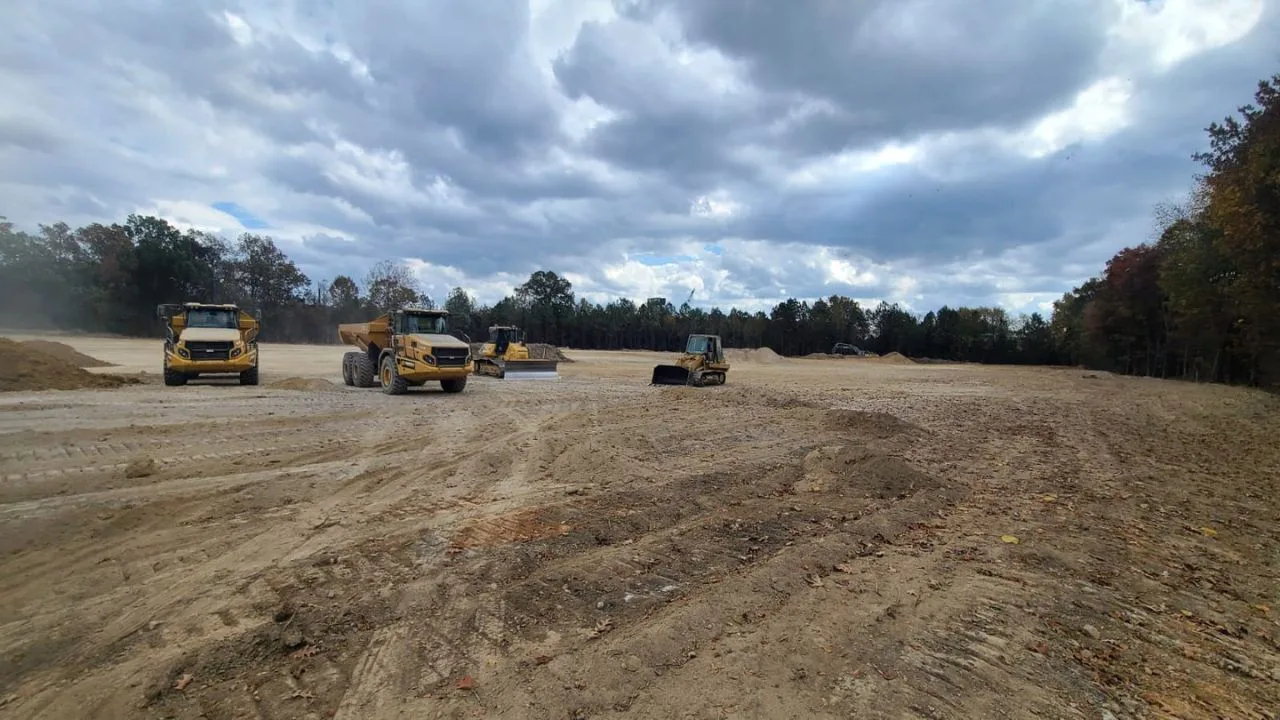
The traditional reclaim was a bulldozer pushing everything into windrows, a burn permit, weeks of smoldering piles, then regrading the scars and root holes before you could even think about seed. It worked, but it removed topsoil, left the field lumpy, and cost heavily in machine hours and cleanup.
Forestry mulching inverts the process. The brush is ground where it stands, flush with the ground. Nothing is uprooted, so the field surface stays smooth. Nothing is piled or burned, so there’s no permit, no smoke, and no scarred burn spots. And the ground brush becomes a mulch layer that composts directly into the field — returning the nutrients that ten years of woody growth pulled out of your soil.
- One machine, one pass — no dozer + excavator + burn crew choreography
- Smooth, drivable surface — ready for a tractor immediately, no regrading
- Topsoil intact — the fertility your grandparents built stays in the field
- No burn piles — no permits, no waiting on weather, no liability
From Mulch to Grazing: The First Year
A field mulched in late summer or fall follows a reliable timeline. Over winter, the mulch layer settles and begins breaking down. In spring, existing grass — bermuda and bahia are nearly impossible to kill in our region — pushes back through, and overseeding fills the gaps; the decomposing mulch acts as both seedbed mulch and slow-release fertilizer. By the first full grazing season, the field carries stock again. The first-year rule of thumb: mow it like you mean it. Woody regrowth that tries to return comes up weak and falls to a bush hog — the routine maintenance that, done consistently, keeps the field in grass permanently.
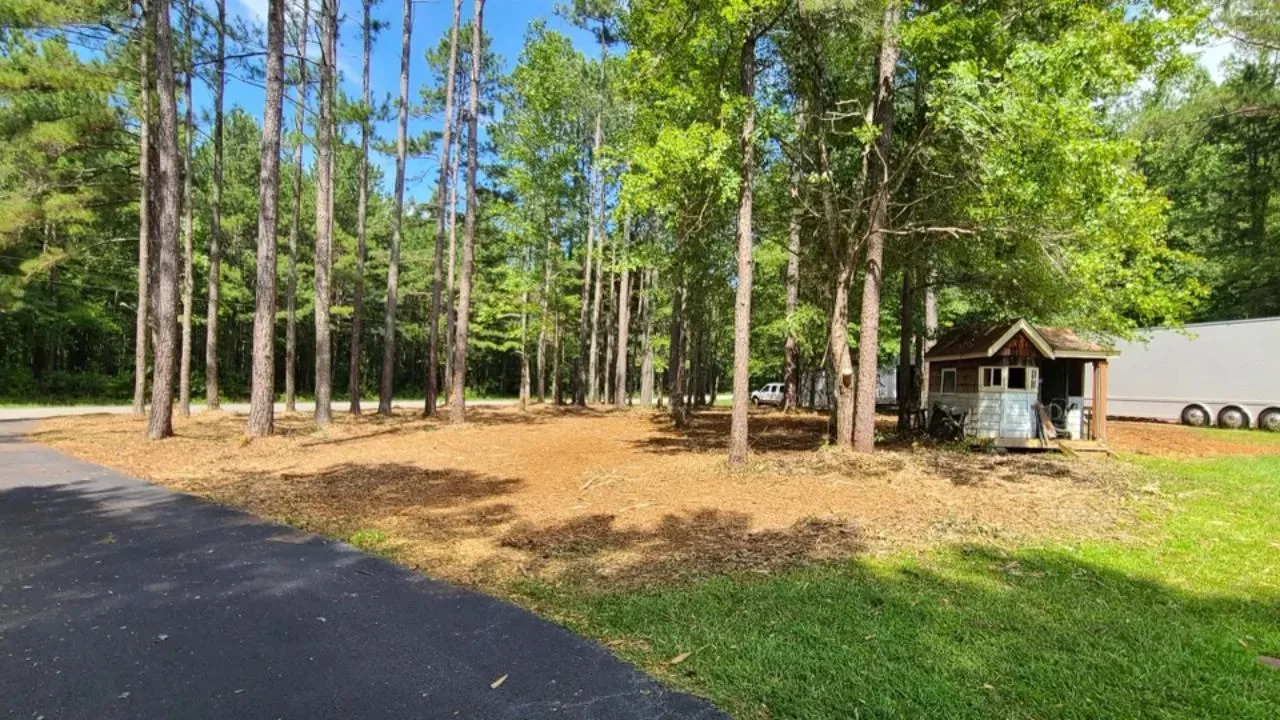
Horse properties deserve a special mention. Brush-choked turnout is more than an eyesore for horse owners — hidden wire, groundhog holes, and toxic plants like wild cherry hide in overgrowth. A mulched pasture gives you visibility over every square foot of ground your animals stand on, and the smooth finish means no root holes or stump stubs at leg-snapping height. The same goes for hay ground: a reclaimed field returns to the cutting rotation the first full season, and every acre back in production is an acre you’re not buying hay for.
Fence Lines, Pond Edges, and the Rest of the Farm
Pasture clearing rarely stops at the field itself. The same machine, on the same visit, typically handles the jobs that have been on the list for years:
- Fence line clearing — exposing and freeing wire that brush swallowed, before replacement or repair
- Pond and creek edges — opening water access for stock without collapsing banks, since roots stay in place
- Farm lanes — reopening equipment routes between fields
- Barn lots and old homesteads — clearing around structures where a dozer couldn’t work safely
That bundling matters for cost: mobilization is a real part of any clearing bill, and one visit that reclaims the field, the fence lines, and the pond edge spreads it across the whole farm’s to-do list.
Planning Your Reclaim: A Quick Field Checklist
Before scheduling, walk the field and note four things. First, the biggest stems: if most woody growth is under six inches in diameter, the whole field is standard mulching work; scattered larger trees can be kept as shade trees or dropped and mulched individually. Second, the wet spots: low corners that hold water are best cleared in late summer when the ground is firm. Third, the fence situation: decide whether old wire is being saved or replaced — it changes how tight to the line the machine works. Fourth, your grazing timeline: if stock needs the field by spring, an August-to-October clearing date sets up the winter breakdown and spring green-up perfectly. Bring those four answers to the estimate call and you’ll get a quote that’s accurate to the day and the dollar.
The Economics: Reclaim vs. Buy
Run the numbers and reclamation is hard to beat. At $800–$2,500 per acre (full detail in our cost article), bringing a brushy field back costs a fraction of buying additional pasture — and the reclaimed field is already fenced, already watered, and already attached to your farm. For landowners leasing out grazing or cutting hay, the payback period is often just a few seasons. There’s a resale angle, too: open, grazable land appraises and shows dramatically better than brush, which is why fields get reclaimed before farms go on the market.
West Georgia Is Pasture Country
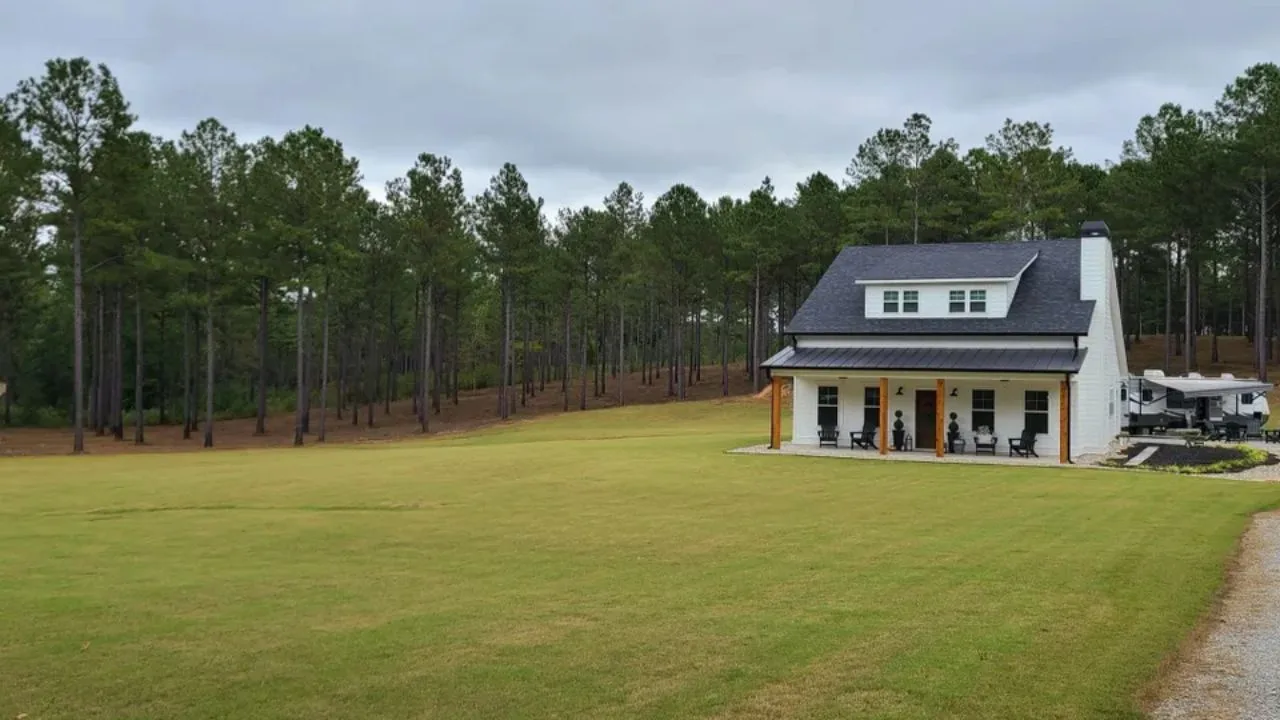
From the cattle operations around Bowdon and Roopville to the horse properties of Harris County and the hay ground across Meriwether and Woodbury, this region runs on grass. We’ve reclaimed fields in every county we serve — see our full services and recent projects, and if the farm next to yours got cleared recently, there’s a good chance we did it.
Frequently Asked Questions
How much does pasture reclamation cost?
Reclaiming brushy pasture with forestry mulching typically costs $800 to $2,500 per acre depending on how far gone the field is — light broomsedge and scattered cedar at the low end, solid sweetgum and privet thicket at the top. It’s almost always cheaper than the bulldoze-pile-burn-regrade route.
How long until reclaimed pasture can be grazed?
Fields mulched in late summer or fall are typically ready for spring grazing. The mulch breaks down over winter, grass re-establishes through it, and the ground is smooth enough for equipment because nothing was uprooted.
Will mulched brush come back in my pasture?
Some woody regrowth will attempt a comeback the first season, but it emerges weak and mowable. Regular bush hogging afterward — the maintenance the field always needed — keeps it permanently in grass.
Put That Field Back to Work
A brushy field is stored value waiting to be unlocked — the soil, the fence, and the water are already yours. One or two days of mulching turns it from the corner of the farm you avoid looking at back into the pasture it always was.
Ready to see your land again? Call or text 706-333-0078 for a free, no-obligation estimate anywhere in west Georgia, or request one online. Most projects are quoted within a day and scheduled within the week.