
Privet creeping through the fence line. Kudzu rolling over the back corner. Sweetgum filling the old field. If you own land in west Georgia, you’re in a fight whether you signed up for it or not. Chinese privet has taken over an estimated million-plus acres of Georgia forestland, kudzu blankets whole hillsides along our highways, and both are on your property line right now, moving. This is what actually works — and what doesn’t — for invasive brush removal and getting rid of Georgia’s worst plants for good.
Know Your Enemy: Why Privet and Kudzu Win
Chinese privet is the quiet one. It doesn’t smother buildings like kudzu; it fills in the forest understory a few feet per year until nothing else can grow. It leafs out earlier than natives, shades out every seedling beneath it, and produces berries that birds spread across the county. Left alone, a privet-invaded woodlot becomes a privet monoculture — no oak regeneration, no browse for deer, no walking through it.
Kudzu is the loud one. Growing up to a foot per day in summer, it climbs and kills mature trees, collapses outbuildings, and buries fences. Its root crowns — some the size of a person — store enough energy to shrug off years of casual cutting.
Both plants beat homeowners the same way: they regrow faster than hand tools can cut. Winning requires removing the standing mass completely, then attacking the regrowth while it’s weak.
Why Mowing and Cutting Alone Fail
A bush hog can knock privet down, but it leaves shattered stems that resprout multiple new leaders each — many landowners discover their thicket is denser two years after mowing than before it. Chainsaw crews face the same problem plus a debris mountain. And bulldozing scrapes away topsoil while dragging privet root fragments around the property, effectively replanting the infestation. The pattern is consistent: partial removal makes these species angry, not gone.
The Mulching Approach: Remove, Smother, Spot-Treat
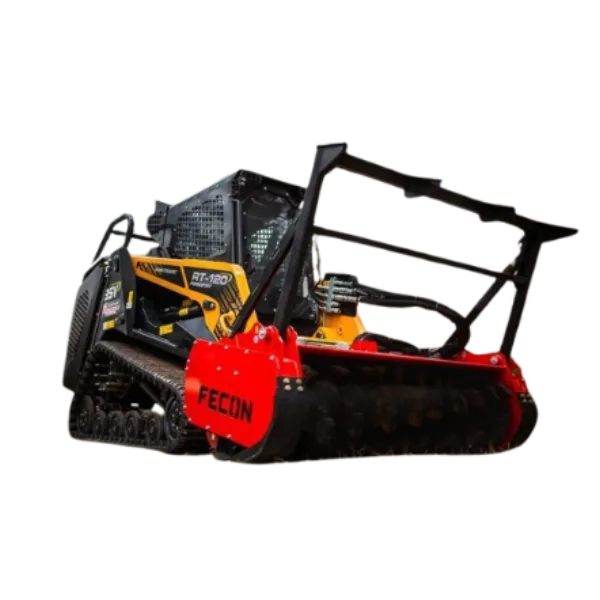
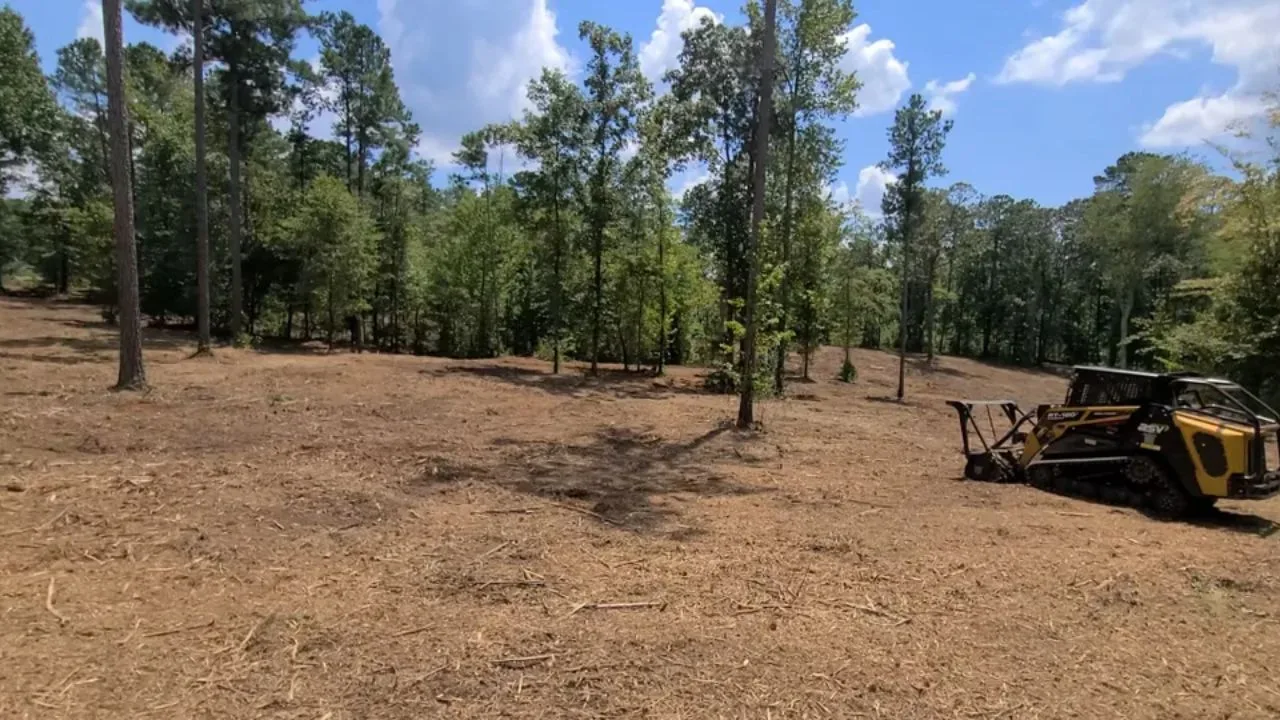
Step one: total above-ground removal. A forestry mulcher grinds the entire thicket — stems, canopy, and berry crop — into mulch in a single pass. This immediately stops seed production and removes the shade that was suppressing everything native.
Step two: the mulch layer works for you. Several inches of ground privet now blanket the soil, blocking sunlight from the seed bank that would otherwise erupt. This is the advantage mowing can never offer: the debris becomes the weapon.
Step three: clean up the survivors. Some stumps will sprout. But scattered knee-high sprouts in open ground are a trivial problem compared with a ten-foot wall of brush — a quick pass of spot treatment or repeat mulching in the following season finishes the job. For kudzu, the same cycle repeated exhausts even large root crowns.
A Realistic Removal Timeline
Here’s what an honest privet or kudzu campaign looks like on the calendar. Day one: the mulcher removes the entire standing infestation — this is the visible transformation, and for lighter invasions it may be the only machine work ever needed. First growing season: stump sprouts and a flush of seedlings appear through the mulch; this is normal, not failure. They’re spot-treated or mowed while small, a few hours of work at most. Second season: pressure drops sharply — the seed bank is largely spent and the root reserves are exhausted. Year three onward: the property is in maintenance mode, needing only an annual walk-through. Kudzu on large root crowns can demand an extra season of follow-up, but the trajectory is the same: each round is dramatically weaker than the last. Compare that with the mow-it-yearly treadmill, where the thicket returns at full strength every single season, and the one-big-push approach wins on both effort and total cost.
What Comes Back When Privet Goes
The transformation after privet removal surprises people. Within a season, native plants that had been waiting in the seed bank reappear — and the property’s character changes:
- Your woods become visible — you can see (and walk) a hundred yards through timber that was a green wall
- Native regeneration returns — oak and hickory seedlings, dogwood, and native grasses reclaim the understory
- Wildlife habitat improves — deer browse and turkey ground replace sterile privet shade
- Property lines and fences reappear — along with usable land you forgot you owned
Privet and kudzu get the headlines, but the same removal approach handles the rest of Georgia’s invasive lineup: sweetgum colonies that carpet old fields, Chinese wisteria strangling timber, autumn olive spreading along fence rows, and multiflora rose making pastures unwalkable. Most west Georgia properties host at least two of these at once, usually trading ground as conditions shift. They all share the same weakness — none of them can survive complete above-ground removal followed by a season or two of cheap, easy follow-up. If your property has a mixed invasion, one mulching pass resets all of it at once, which is far more efficient than fighting each species separately.
Protecting What You’ve Cleared
Because privet berries arrive by bird, no property stays privet-free without occasional attention. The practical maintenance plan is simple: walk the cleared areas once a year, pull or treat isolated seedlings while they’re small, and re-mulch field edges every few years if pressure from neighboring land is heavy. Ten minutes of yearly vigilance protects a clearing investment indefinitely — far cheaper than letting the cycle restart.
The West Georgia Context
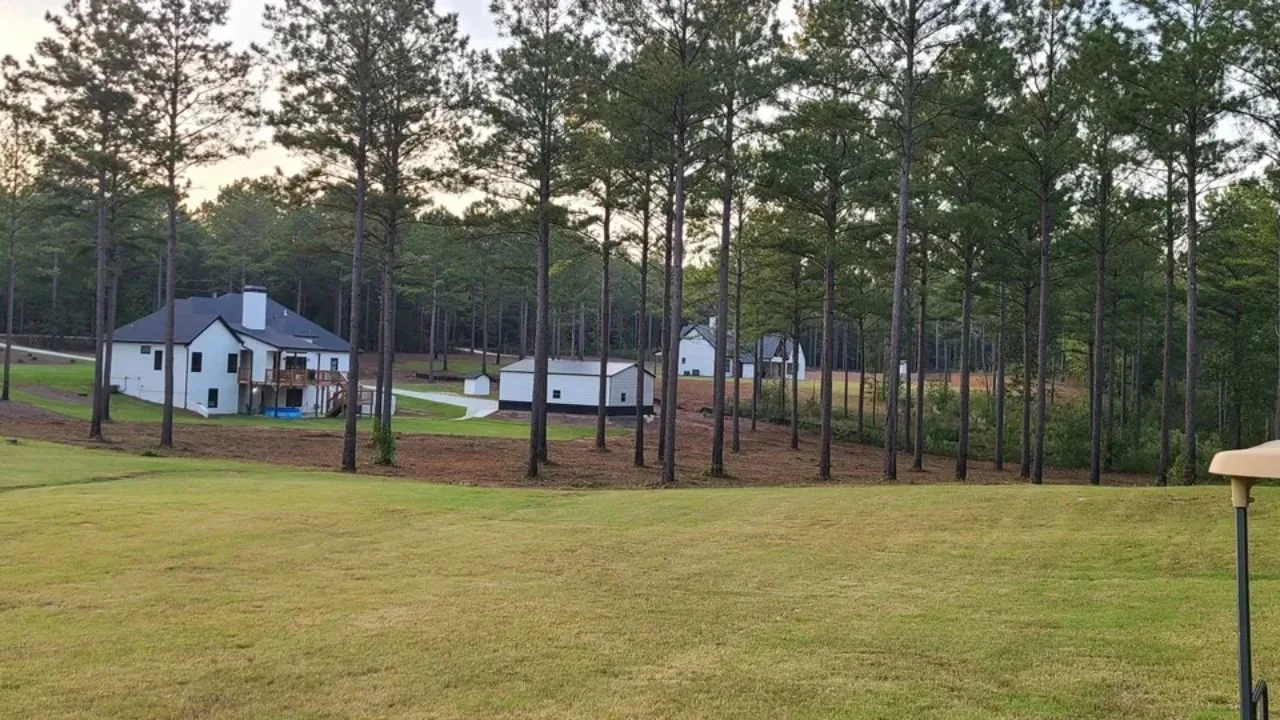
Our region’s creek bottoms and fence rows are privet’s favorite habitat, and the mild winters that make Georgia green also mean invasives never get knocked back by climate. We handle privet removal and kudzu removal on Georgia properties from Columbus and Cataula up through LaGrange, Newnan, and Carrollton — it’s among the most common reasons customers call. Costs fall in the standard mulching range covered in our pricing article, and every job starts with a free walk-through of the infestation.
Frequently Asked Questions
What permanently kills privet?
Mechanical removal by forestry mulching, followed by treatment of the regrowth, is the most reliable approach. Mulching removes the mature thicket and seed-producing canopy in one pass; the mulch layer then suppresses seedlings, and the scattered stump sprouts that return are easy to spot-treat. Cutting alone without follow-up allows privet to resprout.
Can you get rid of kudzu without chemicals?
Repeated defoliation is the non-chemical route: mulching the vines and root crowns, then knocking back regrowth before it re-establishes, steadily exhausts the root system. Most landowners combine an initial mulching pass with targeted follow-up treatment for the fastest permanent result.
How much does invasive brush removal cost?
Privet and kudzu infestations fall in the normal forestry mulching range of $800 to $2,500 per acre, with dense monoculture thickets at the higher end. It’s a one-machine job with no debris hauling, which keeps it far cheaper than excavation.
Start Winning the Fight
Invasive brush only moves in one direction on its own. The season you decide to push back is the season the property starts coming back — and with the right equipment, the first (and biggest) battle takes a day.
Ready to see your land again? Call or text 706-333-0078 for a free, no-obligation estimate anywhere in west Georgia, or request one online. Most projects are quoted within a day and scheduled within the week.